Roasted Winter Veggie Salad – Butternut Squash Beets
Winter Vegetable Salad with Butternut Squash, Brussels Sprouts, and Beets is more than just a salad; it’s a vibrant ode to the heart of autumn and winter, a dish that truly captures the essence of cozy, nourishing comfort. As the days grow shorter and the air crisp, our cravings turn towards hearty, grounding flavors, and this salad delivers precisely that. People adore this particular combination for its delightful dance of textures and tastes: the inherent sweetness of roasted butternut squash, the slightly bitter, satisfying chew of perfectly cooked Brussels sprouts, and the earthy, jewel-toned beauty of roasted beets. What truly elevates this Winter Vegetable Salad with Butternut Squash, Brussels Sprouts, and Beets from ordinary to extraordinary is the masterful balance achieved through simple, yet impactful, additions. We’ll explore how a tangy vinaigrette and perhaps a scattering of crunchy nuts or seeds transform these humble root vegetables and cruciferous stars into a culinary masterpiece that’s both visually stunning and incredibly satisfying, making it your new go-to for holiday gatherings or a wholesome weeknight meal.
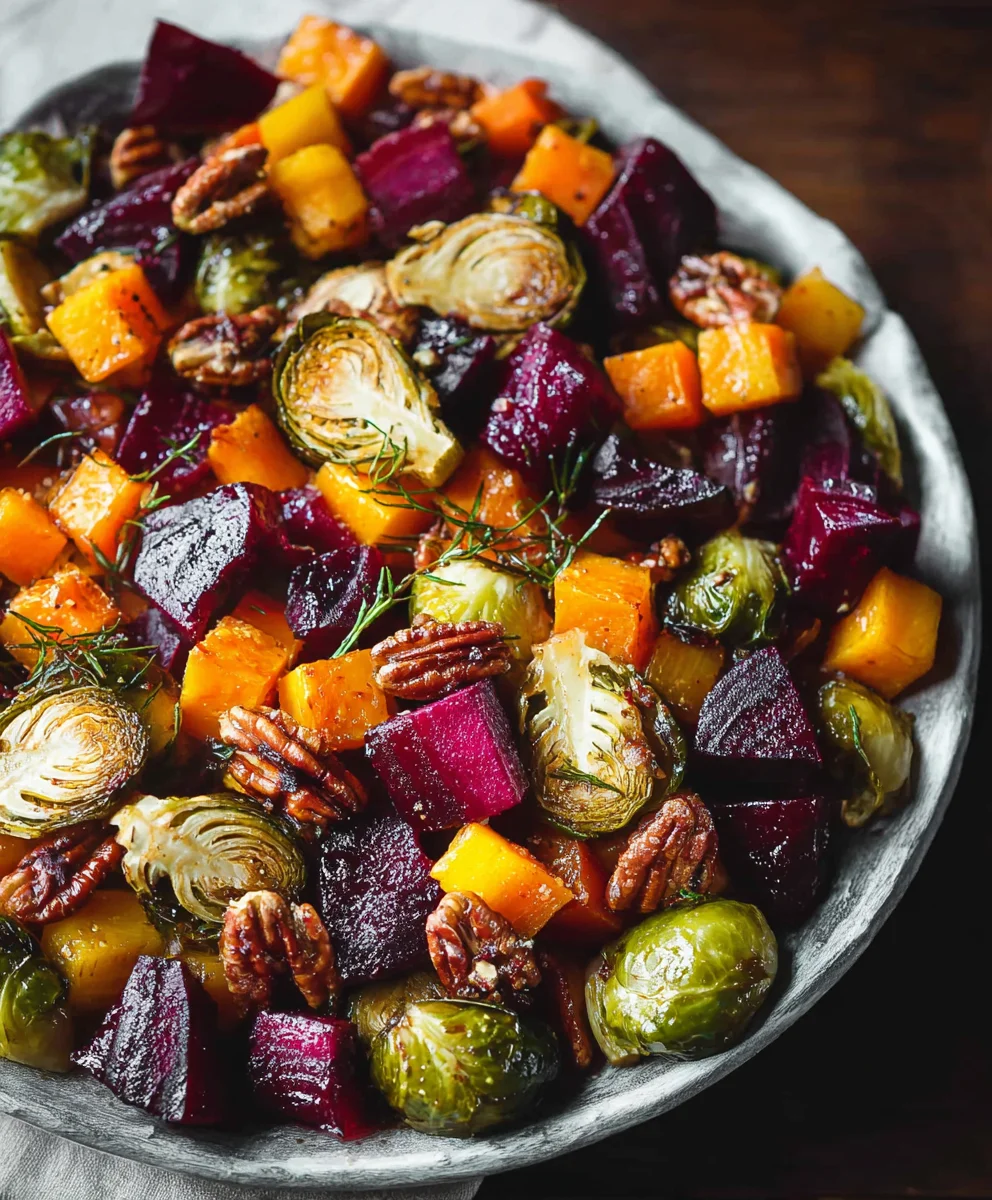
Ingredients:
- 3 cups Brussels sprouts, raw, with ends trimmed and any yellow outer leaves removed
- 2 tablespoons olive oil
- Salt, to taste
- 4 cups butternut squash, uncooked, peeled, seeded, and cut into approximately 1-inch cubes
- 2 tablespoons olive oil
- Salt, to taste
- 2 large beets, pre-cooked (it’s best to do this a day ahead for easier handling)
- 2 cups pecan halves
- 1 cup dried cranberries
- 1 cup balsamic vinegar
- 1/4 cup honey (or brown sugar, if you prefer)
- 4 tablespoons pure maple syrup
- 1 tablespoon freshly squeezed lime juice, plus an additional tablespoon to adjust to your taste
Preparing the Roasted Vegetables
Roasting the Butternut Squash
Begin extract by preheating your oven to 400°F (200°C). This consistent, hot temperature is crucial for achieving perfectly tender and slightly caramelized butternut squash. Take your prepared butternut squash cubes and place them in a large mixing bowl. Drizzle them with 2 tablespoons of olive oil and sprinkle generously with salt. Toss everything together thoroughly to ensure each cube is evenly coated in oil and seasoned. This even coating promotes uniform cooking and prevents sticking. Spread the seasoned squash in a single layer on a large baking sheet. Avoid overcrowding the pan; if necessary, use two baking sheets. Overcrowding will steam the squash rather than roast it, leading to a mushy texture. Roast for 20-25 minutes, or until the squash is tender when pierced with a fork and starting to show lovely golden-brown edges.
Roasting the Brussels Sprouts
While the butternut squash is roasting, prepare the Brussels sprouts. Trim any tough ends from the Brussels sprouts and remove any loose or discolored outer leaves. If the sprouts are particularly large, you can halve them lengthwise. Place the prepared Brussels sprouts in the same large mixing bowl you used for the squash (no need to wash it!). Add the remaining 2 tablespoons of olive oil and a good pinch of salt. Toss to coat the sprouts evenly. Once the butternut squash has been roasting for about 15 minutes, add the seasoned Brussels sprouts to the same baking sheet, or to a second baking sheet if you’re using two. Ensure they also have a single layer for optimal roasting. Continue roasting for another 15-20 minutes, or until the Brussels sprouts are tender-crisp and have developed beautifully browned, slightly crispy outer leaves. You want them to have a bit of bite, not be completely soft.
Preparing the Beets and Dressing
Preparing the Pre-Cooked Beets
If you haven’t already, it’s highly recommended to pre-cook your beets. You can roast them whole, unpeeled, in the oven at 400°F (200°C) until tender (about 45-60 minutes, depending on size), or boil them until tender. Once cooked, allow them to cool slightly until they are manageable to handle. The skins should slip off easily once cooled. Peel the cooked beets and then cut them into bite-sized pieces, similar in size to your cubed butternut squash. The pre-cooking step makes the beets much easier to peel and cut, and also prevents their vibrant color from bleeding excessively throughout the salad.
Making the Balsamic Honey Vinaigrette
In a small bowl or a jar with a tight-fitting lid, combine the balsamic vinegar, honey (or brown sugar), pure maple syrup, and the first tablespoon of freshly squeezed lime juice. Whisk or shake the ingredients vigorously until well combined and the honey/sugar is fully dissolved. This vinaigrette is designed to be a perfect balance of sweet and tangy, complementing the earthy flavors of the roasted vegetables and the richness of the nuts. Taste the vinaigrette at this stage. If you prefer a more pronounced tang, add the second tablespoon of lime juice. You can also adjust the sweetness by adding a touch more honey or maple syrup if desired.
Assembling the Winter Vegetable Salad
In a large serving bowl, gently combine the roasted butternut squash, roasted Brussels sprouts, and the prepared beet pieces. Add the pecan halves and dried cranberries to the bowl. The pecans will provide a delightful crunch, while the dried cranberries offer bursts of chewy sweetness. Pour about half of the prepared balsamic honey vinaigrette over the mixture. Toss gently to coat all the ingredients without mashing the roasted vegetables. You want each component to be lightly dressed. Add more dressing as needed, to your preference. You might not need all of the dressing, or you might prefer it a bit more dressed. Serve the salad warm or at room temperature. It’s a hearty and flavorful dish that stands well on its own or as a beautiful accompaniment to roasted meats or poultry. The combination of textures and flavors makes this a truly satisfying winter salad.
Conclusion:
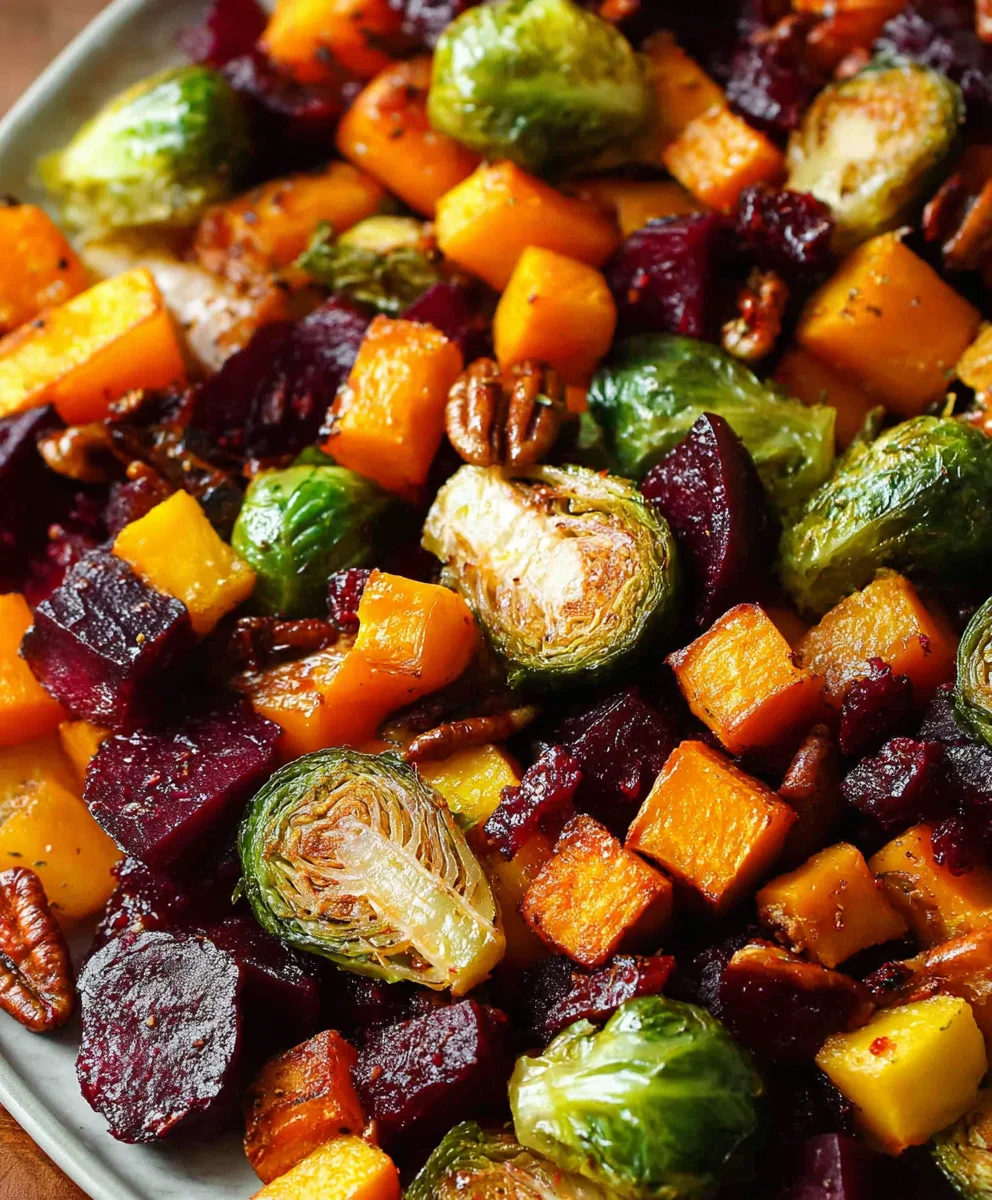
I hope you’ve enjoyed learning how to create this vibrant and flavorful Winter Vegetable Salad with Butternut Squash, Brussels Sprouts, and Beets! This dish is a testament to how simple, seasonal ingredients can come together to form a truly satisfying and nutritious meal. The sweetness of the roasted butternut squash, the slight bitterness of the Brussels sprouts, and the earthy notes of the beets create a beautiful harmony of flavors, all brought together by a zesty lemon vinaigrette. It’s a perfect example of how to embrace the best of winter produce.
This Winter Vegetable Salad with Butternut Squash, Brussels Sprouts, and Beets is incredibly versatile. Serve it as a hearty side dish alongside roasted chicken or beef, or make it the star of your vegetarian or vegan meal by topping it with some toasted nuts, seeds, or even a dollop of creamy goat cheese. For a heartier twist, consider adding some cooked quinoa or lentils.
Don’t be afraid to experiment! If you’re not a fan of Brussels sprouts, try broccoli or cauliflower. Pears or apples can be a wonderful addition alongside the squash for a touch of crisp sweetness. The possibilities are endless when you’re working with such wonderful ingredients. So, gather your winter vegetables and give this delicious salad a try. I’m confident it will become a new favorite!
Frequently Asked Questions:
Can I make the Winter Vegetable Salad with Butternut Squash, Brussels Sprouts, and Beets ahead of time?
Yes, absolutely! You can roast the vegetables (butternut squash, Brussels sprouts, and beets) a day in advance and store them separately in airtight containers in the refrigerator. The vinaigrette can also be made ahead and stored. Toss everything together just before serving to prevent the salad from becoming soggy.
What if I don’t have fresh beets? Can I use canned or pre-cooked beets?
You can certainly use canned or pre-cooked beets for this Winter Vegetable Salad with Butternut Squash, Brussels Sprouts, and Beets. Drain them well and chop them into bite-sized pieces. While the flavor might be slightly different than roasted fresh beets, they will still contribute a lovely color and earthiness to the salad.
Roasted Winter Veggie Salad – Butternut Squash Beets
A hearty and flavorful winter salad featuring roasted butternut squash, Brussels sprouts, and beets, tossed with pecans, cranberries, and a tangy balsamic honey vinaigrette.
Ingredients
-
3 cups Brussels sprouts, raw, with ends trimmed and any yellow outer leaves removed
-
4 tablespoons olive oil
-
Salt, to taste
-
4 cups butternut squash, uncooked, peeled, seeded, and cut into approximately 1-inch cubes
-
2 large beets, pre-cooked
-
2 cups pecan halves
-
1 cup dried cranberries
-
1 cup balsamic vinegar
-
1/4 cup honey (or brown sugar, if you prefer)
-
4 tablespoons pure maple syrup
-
2 tablespoons freshly squeezed lime juice
Instructions
-
Step 1
Preheat oven to 400°F (200°C). Toss butternut squash cubes with 2 tablespoons of olive oil and salt. Spread in a single layer on a baking sheet and roast for 20-25 minutes, or until tender and golden brown. -
Step 2
While squash roasts, trim and prepare Brussels sprouts. Toss with remaining 2 tablespoons of olive oil and salt. Add seasoned Brussels sprouts to the baking sheet with the squash (or a second sheet) after the squash has roasted for 15 minutes. Continue roasting for another 15-20 minutes until tender-crisp and browned. -
Step 3
If beets are not pre-cooked, roast or boil them until tender. Once cooled slightly, peel and cut into bite-sized pieces similar in size to the squash. -
Step 4
Prepare the vinaigrette by combining balsamic vinegar, honey (or brown sugar), maple syrup, and 1 tablespoon of lime juice in a bowl or jar. Whisk or shake until well combined. Add the second tablespoon of lime juice to taste. -
Step 5
In a large serving bowl, combine the roasted butternut squash, roasted Brussels sprouts, and prepared beet pieces. Add pecan halves and dried cranberries. -
Step 6
Pour about half of the vinaigrette over the salad ingredients and toss gently to coat. Add more dressing as needed, to your preference. Serve warm or at room temperature.
Important Information
Nutrition Facts (Per Serving)
It is important to consider this information as approximate and not to use it as definitive health advice.
Allergy Information
Please check ingredients for potential allergens and consult a health professional if in doubt.