Philly Cheesesteak Pasta- Easy Beef & Cheese Recipe
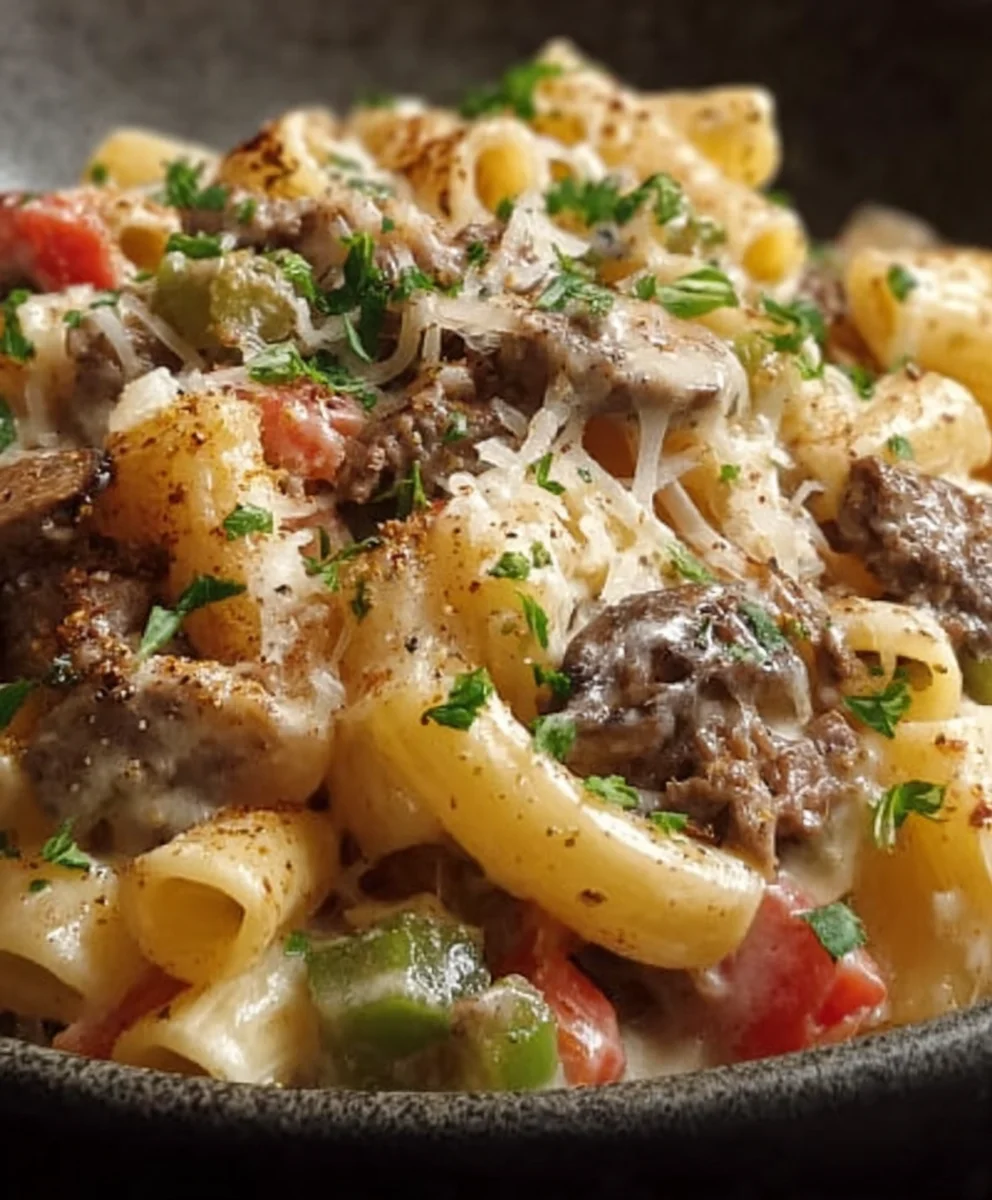
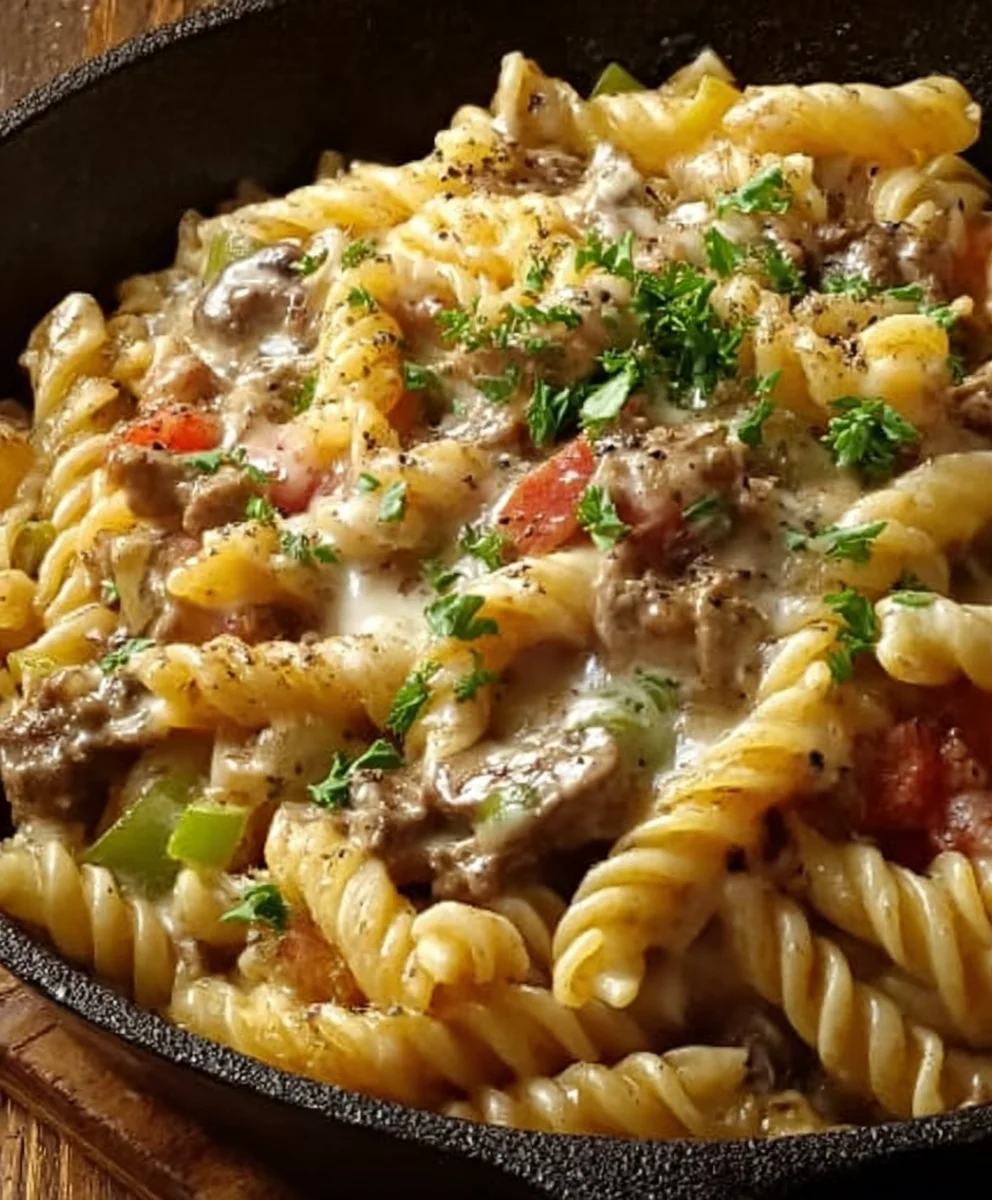
Philly Cheesesteak Pasta is the ultimate comfort food mashup, bringin extractg together the iconic flavors of your favorite hoagie in a creamy, satisfying pasta dish. We’ve all been there, craving that savory combination of thinly sliced steak, melted cheese, and caramelized onions, but sometimes a sandwich just doesn’t hit the spot for a full meal. That’s where this incredible Philly Cheesesteak Pasta comes in, transforming a beloved classic into something even more universally appealing. It’s a dish that evokes a sense of pure indulgence, perfect for a cozy night in or for sharing with friends and family. The magic lies in its ability to capture all the rich, delicious essence of a traditional Philly cheesesteak – that irresistible umami from the beef, the sweet depth of the onions, and the gooey, stretchy cheese – all embraced by perfectly cooked pasta. Get ready to dive into a bowl of pure bliss!
Ingredients:
- 1 lb ground beef or steak strips
- 1 green bell pepper, diced
- 1 onion, diced
- 2 cloves garlic, minced
- 8 oz cream cheese, softened
- 1 cup shredded provolone cheese
- 12 oz pasta (penne or rigatoni recommended)
- 1 cup beef broth
- Salt and pepper to taste
- 1 tbsp olive oil
Cooking the Philly Cheesesteak Pasta
Pasta Preparation
Begin extract by getting your pasta cooking. Bring a large pot of generously salted water to a rolling boil. Add your 12 ounces of pasta. I find that penne or rigatoni work exceptionally well for this dish because their shapes hold onto the creamy sauce beautifully. Cook the pasta according to the package directions until it is al dente, which means it should still have a slight bite to it. Nobody likes mushy pasta! Once the pasta is cooked, reserve about 1 cup of the starchy pasta water before draining it completely. This reserved water is a secret weapon for achieving a silky smooth sauce. Set the drained pasta aside.
Sautéing the Aromatics and Beef
Now, let’s build that classic Philly cheesesteak flavor. Heat 1 tablespoon of olive oil in a large skillet or Dutch oven over medium-high heat. Add your 1 pound of ground beef or steak strips. If you’re using steak strips, make sure to cut them into bite-sized pieces for easier eating. Break up the ground beef as it cooks and cook until it’s nicely browned and no pink remains. Once the beef is cooked, carefully drain off any excess grease. This step is crucial for preventing a greasy sauce. Add your diced onion and diced green bell pepper to the skillet with the beef. Cook, stirring occasionally, for about 5-7 minutes, or until the vegetables have softened and the onion is translucent.
Developing the Creamy Sauce Base
It’s time to introduce the creamy elements that make this dish so irresistible. Add your 2 cloves of minced garlic to the skillet with the beef and vegetables. Cook for just about 1 minute until fragrant, being careful not to burn the garlic as it can become bitter. Now, add the 8 ounces of softened cream cheese to the skillet. Stir it in and let it melt into the beef and vegetable mixture. This will start to create a rich, luscious base for your sauce. Gradually pour in 1 cup of beef broth, stirring continuously to help the cream cheese break down and combine smoothly with the broth. Continue to stir until the sauce is relatively smooth and has thickened slightly.
Incorporating the Cheesy Goodness
This is where the magic truly happens and we get that signature cheesesteak flavor profile. Stir in 1 cup of shredded provolone cheese. Continue to stir until the provolone cheese is completely melted and has blended seamlessly into the creamy sauce. The cheese will add a wonderful depth of flavor and that classic gooey texture. At this stage, taste the sauce and season it generously with salt and pepper to your liking. Remember that both the beef broth and the cheese can contribute saltiness, so season incrementally.
Combining Everything for the Ultimate Pasta Dish
Now for the grand finnon-alcoholic ale! Add the drained, cooked pasta to the skillet with the creamy Philly cheesesteak sauce. Toss everything together gently until every piece of pasta is coated in the luscious sauce. If the sauce seems a little too thick for your liking, don’t hesitate to add a splash of the reserved pasta water, a tablespoon at a time, until you reach your desired consistency. The starch in the pasta water will help emulsify the sauce and make it even smoother. Continue to cook for another minute or two, just to heat everything through and allow the flavors to meld together beautifully. Serve your delicious Philly Cheesesteak Pasta immediately, perhaps with an extra sprinkle of provolone cheese on top for good measure.
Conclusion:
We’ve reached the end of our delicious journey crafting the ultimate Philly Cheesesteak Pasta! This dish truly captures the essence of a classic cheesesteak in a comforting, one-pot pasta format. The tender beef, sweet caramelized onions, and bell peppers, all coated in a creamy, cheesy sauce, create a flavor explosion that’s both satisfying and incredibly easy to make. I hope you’ve enjoyed learning how to bring this crowd-pleaser to your table. Its simplicity makes it perfect for a weeknight meal, yet it’s impressive enough to serve guests.
When it comes to serving the Philly Cheesesteak Pasta, I love to top it with a sprinkle of fresh parsley for a pop of color and freshness. A side of garlic bread or a simple green salad also complements it beautifully. For variations, feel free to experiment! You can add mushrooms along with the onions and peppers, or swap out the cheese for a blend of provolone and mozzarella. Some people even enjoy a pinch of red pepper flakes for a little heat.
Don’t be afraid to make this your own! The beauty of this Philly Cheesesteak Pasta is its adaptability. So go ahead, gather your ingredients, and dive in. I’m confident you’ll fall in love with this hearty and flavorful pasta dish. Happy cooking!
Frequently Asked Questions about Philly Cheesesteak Pasta:
Q1: Can I use a different type of pasta for Philly Cheesesteak Pasta?
Absolutely! While penne or rotini work wonderfully to hold the sauce, you can use almost any short pasta shape you prefer. Elbow macaroni, farfalle, or even rigatoni would be fantastic choices for your Philly Cheesesteak Pasta. Just be sure to cook the pasta according to package directions until al dente.
Q2: What kind of beef is best for this recipe?
For the most authentic and tender results in your Philly Cheesesteak Pasta, thinly sliced ribeye steak is ideal. However, sirloin or even flank steak can be used if sliced very thinly against the grain. Pre-sliced steak for stir-fries can also be a convenient shortcut.
Philly Cheesesteak Pasta
An easy and delicious recipe for Philly Cheesesteak Pasta featuring ground beef, bell peppers, onions, and a creamy, cheesy sauce.
Ingredients
-
1 lb ground beef
-
1 green bell pepper, diced
-
1 onion, diced
-
2 cloves garlic, minced
-
8 oz cream cheese, softened
-
1 cup shredded provolone cheese
-
12 oz penne pasta
-
1 cup beef broth
-
Salt and pepper to taste
-
1 tbsp olive oil
Instructions
-
Step 1
Cook pasta according to package directions until al dente. Reserve 1 cup of pasta water before draining. Set pasta aside. -
Step 2
Heat olive oil in a large skillet over medium-high heat. Add ground beef and cook until browned. Drain excess grease. Add diced onion and bell pepper, and cook until softened, about 5-7 minutes. -
Step 3
Add minced garlic and cook for 1 minute until fragrant. Stir in softened cream cheese until melted, then gradually add beef broth, stirring until smooth. -
Step 4
Stir in shredded provolone cheese until melted and blended into the sauce. Season with salt and pepper to taste. -
Step 5
Add drained pasta to the skillet with the sauce. Toss to coat. If needed, add reserved pasta water a tablespoon at a time to reach desired consistency. Cook for another 1-2 minutes to heat through. Serve immediately.
Important Information
Nutrition Facts (Per Serving)
It is important to consider this information as approximate and not to use it as definitive health advice.
Allergy Information
Please check ingredients for potential allergens and consult a health professional if in doubt.